The Bray Schools
Letter 104
Kind Reader,
Late in 1757, whilst I lived in London, the Rev. Dr. John Waring requested my advice. He represented The Associates of Dr. Bray, a society dedicated to the education of Negroes and Indians in America. (The society was named for the Rev. Dr. Thomas Bray, the founder of both The Society for Promoting Christian Knowledge and The Society for the Propagation of the Gospel in Foreign Parts.) The Associates wished to established schools for the benefit of the objects of their charity in the several parts of America. Their attempts in South Carolina and Georgia had come to nothing, Dr. Waring hoped that I might assist them in their next effort.
I recommended Philadelphia as the properest place to establish a school for Negro children, noting in a letter on January 3, 1758:
At present few or none give their Negro children any schooling, partly from a prejudice that reading and knowledge in a slave are both useless and dangerous; and partly from an unwillingness in the masters and mistresses of common schools to take black scholars, lest the parents of the white children should be disgusted and take them away, not choosing to have their children mixed with slaves in education, play, &c. But a separate school for blacks, under the care of one, of whom people should have an opinion that he would be careful to imbue the minds of their young slaves with good principles, might probably have a number of blacks sent to it; and if on experience it should be found useful, and not attended with the ill consequences commonly apprehended, the example might be followed in the other colonies, and encouraged by the inhabitants in general.
And such a school was indeed opened later that year.
My wife Deborah took an interest in the school and reported to me her observations of it, I continuing in London. I confess to being, at the time, a little skeptical of the use of such a school, having still a prejudice against the Negroes. I had always abhorred the cruelty and injustice of the slave trade; and while I had long regretted that slaves were ever brought to America, my concern had chiefly been in the ill effect their coming had upon the white inhabitants. I confess having at the time no particularly high opinion of the Negroes themselves, an opinion I have come to regret as erroneous.
After hearing report of the success of the school in Philadelphia, I recommended to the Associates that additional schools might be beneficially opened in New York, and Williamsburg. In 1760 these schools were opened and I was elected a member of the Associates. A fourth school was later begun at Newport, and a fifth school, the second in Virginia, was opened at Fredericksburg in 1765, but proved the least successful of all, so few people in Virginia being willing to have their slaves educated. None of these schools survived the independence of these states, as they were cut off from the moneys the Associates in England had hitherto supplied them, though that in Philadelphia was reopened in 1786.
I give you today two letters I wrote to Dr. Waring after my return to America in November of 1762. That more might in future be done in these states to not merely liberate the unfortunate Africans here, but to provide them the means to flourish, is the sincere wish of
you friend and humble servant,
B. Franklin
__________________________
New York – June 27, 1763.
Reverend and Dear Sir,
Being here on my Journey to New England, I received your favor of April 5th. You will easily conceive that after an absence of near six years from my family and affairs, my attention must be much engrossed on my arrival by many things that required it; not to mention a multiplicity of visits, &c., that devour abundance of time.
I inquired however of Mr. [William] Sturgeon concerning the Negro School [in Philadelphia] though I could not visit it, and had the satisfaction to hear it was full and went on in general well, though he had met with some difficulties during the late dissensions in the Church; but they were pretty well over. He gave me the enclosed list of the scholars.
As soon as I return to Philadelphia, which I hope to do by the beginning of September, I shall inspect the school very particularly, and afford every assistance in my power to Mr. Sturgeon, in promoting the laudable views of the Associates, to whom please to present my best respects. Since my arrival in America, I made a journey too to Williamsburg, near 350 miles, which took me five weeks; on business of the post office. I there had a long conversation with Mr. [Robert Carter] Nicholas concerning the school in that place, of which I need not give you any account, as you have received his letter which he told me he had written to you. He appears a very sensible and a very conscientious man, and will do his best in the affair, but is sometimes a little diffident as to the final success, in making sincere good Christians of the scholars; their continuance at the school being short. I think to visit the school here, which Mr. [Samuel] Auchmuty tells me is in a good way. And as I expect to be at Newport in Rhode Island next week, I shall speak to Mr. [Marmaduke] Brown concerning the letters you have wrote him, and promote a school there if practicable.
I thank you for your kind congratulations on the marriage and preferment of my son, and am with great esteem, and respect, reverend sir,
your most obedient humble servant,
B. Franklin
__________________________
Philadelphia – December 17, 1763.
Reverend and Dear Sir,
Being but just returned home from a tour through the northern colonies, that has employed the whole summer, my time at present is so taken up that I cannot now write fully in answer to the letters I have received from you, but purpose to do it shortly. This is chiefly to acquaint you, that I have visited the Negro School here in company with the Rev. Mr. Sturgeon and some others; and had the children thoroughly examined. They appeared all to have made considerable progress in reading for the time they had respectively been in the school, and most of them answered readily and well the questions of the catechism; they behaved very orderly, showed a proper respect and ready obedience to the mistress, and seemed very attentive to, and a good deal affected by, a serious exhortation with which Mr. Sturgeon concluded our visit.
I was on the whole much pleased, and from what I then saw, have conceived a higher opinion of the natural capacities of the black race, than I had ever before entertained. Their apprehension seems as quick, their memory as strong, and their docility in every respect equal to that of white children. You will wonder perhaps that I should ever doubt it, and I will not undertake to justify all my prejudices, nor to account for them.
I immediately advanced the two guineas you mentioned, for the mistress, and Mr. Sturgeon will therefore draw on you for £7/18s only, which makes up the half year’s salary of ten pounds.
Be pleased to present my best respects to the Associates, and believe me, with sincere esteem dear sir,
your most obedient servant,
B. Franklin
______________________________
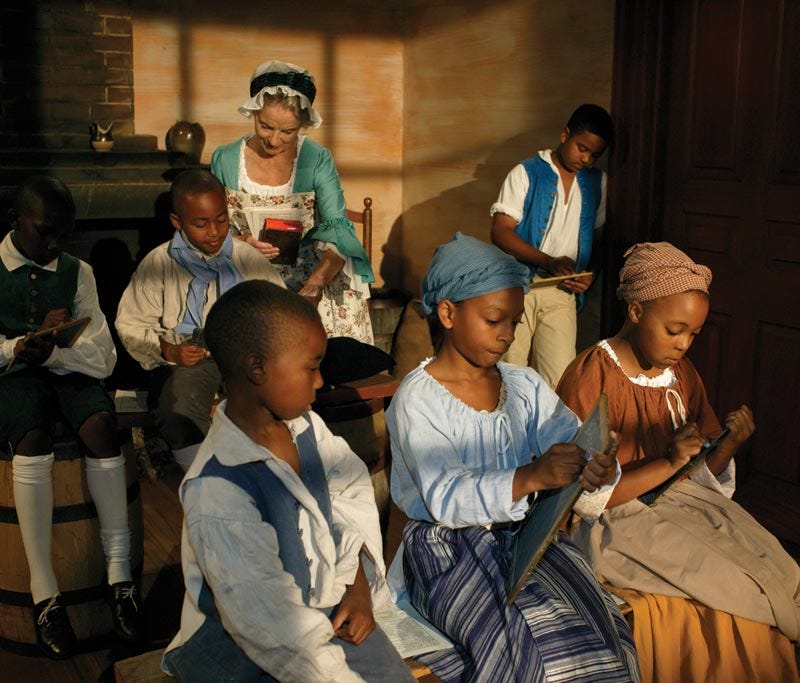
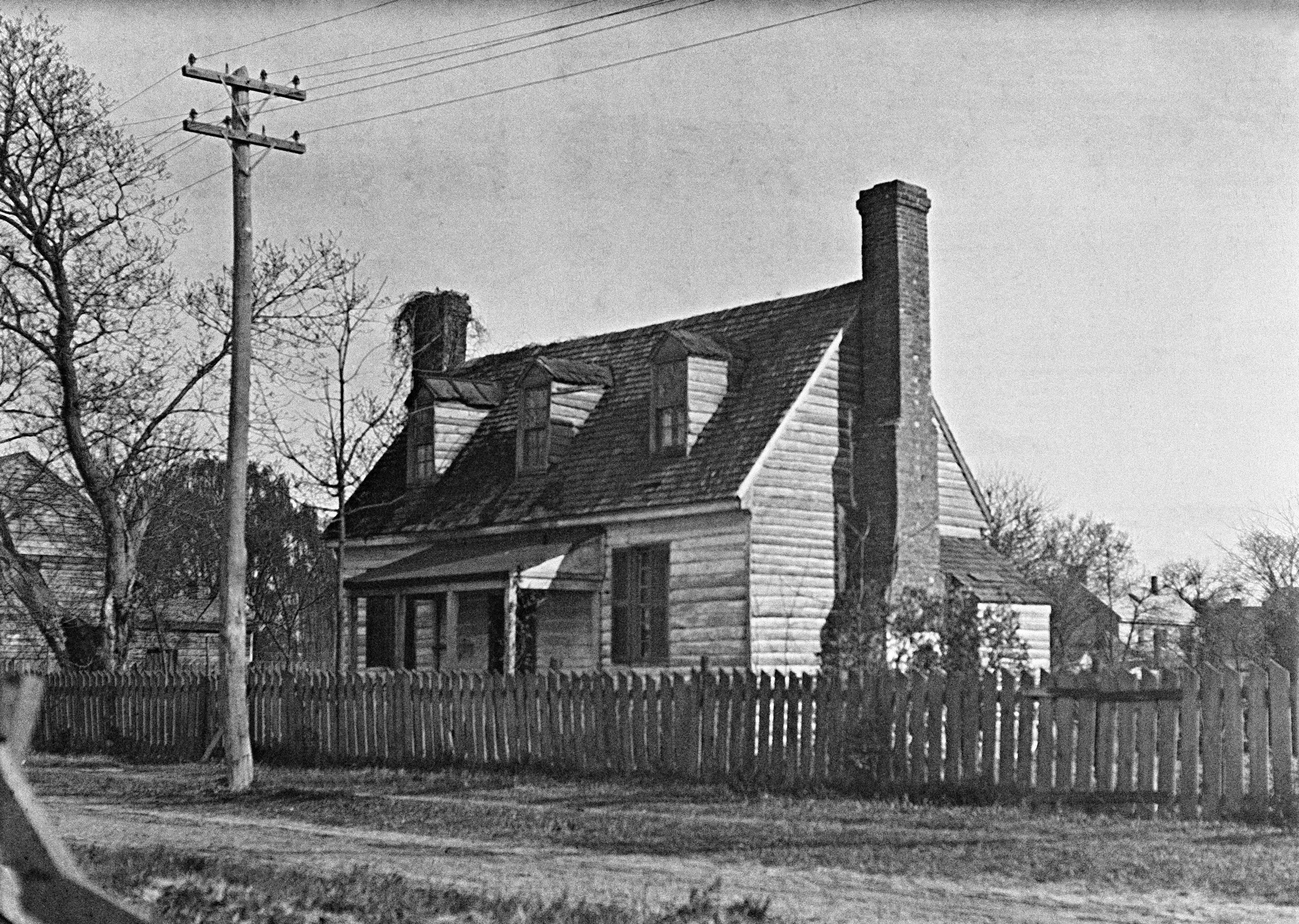
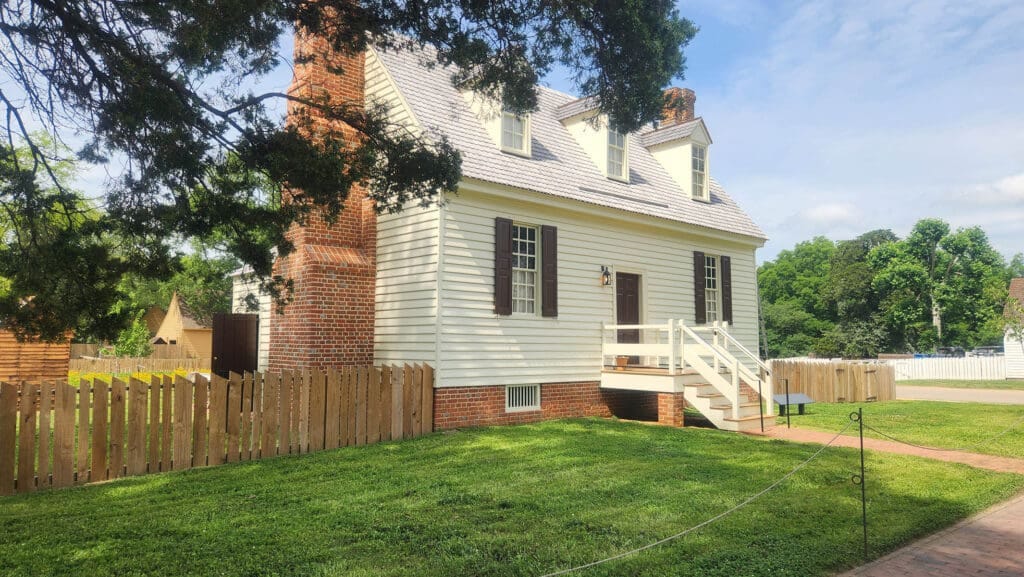
[ N.B. Above is a photograph taken in the 1920s of the then-160-year-old house in Williamsburg, Virginia, which held the Bray School in the early 1760s. Below is a picture of the same house newly restored as one of Colonial Williamsburg’s exhibition buildings. ]