
The Whistle
Letter 111
Kind Reader,
While in France I lived in the village of Passy, very near to Paris and on the road thence to Versailles. In the house in which I lived, a house lent to me by a friend of America, I kept a small printing press for various official purposes; however, I also used to print little trifles which I wrote for the amusement of my friends. I called these trifles by the French word “bagatelles” and commonly printed them in both French and English.
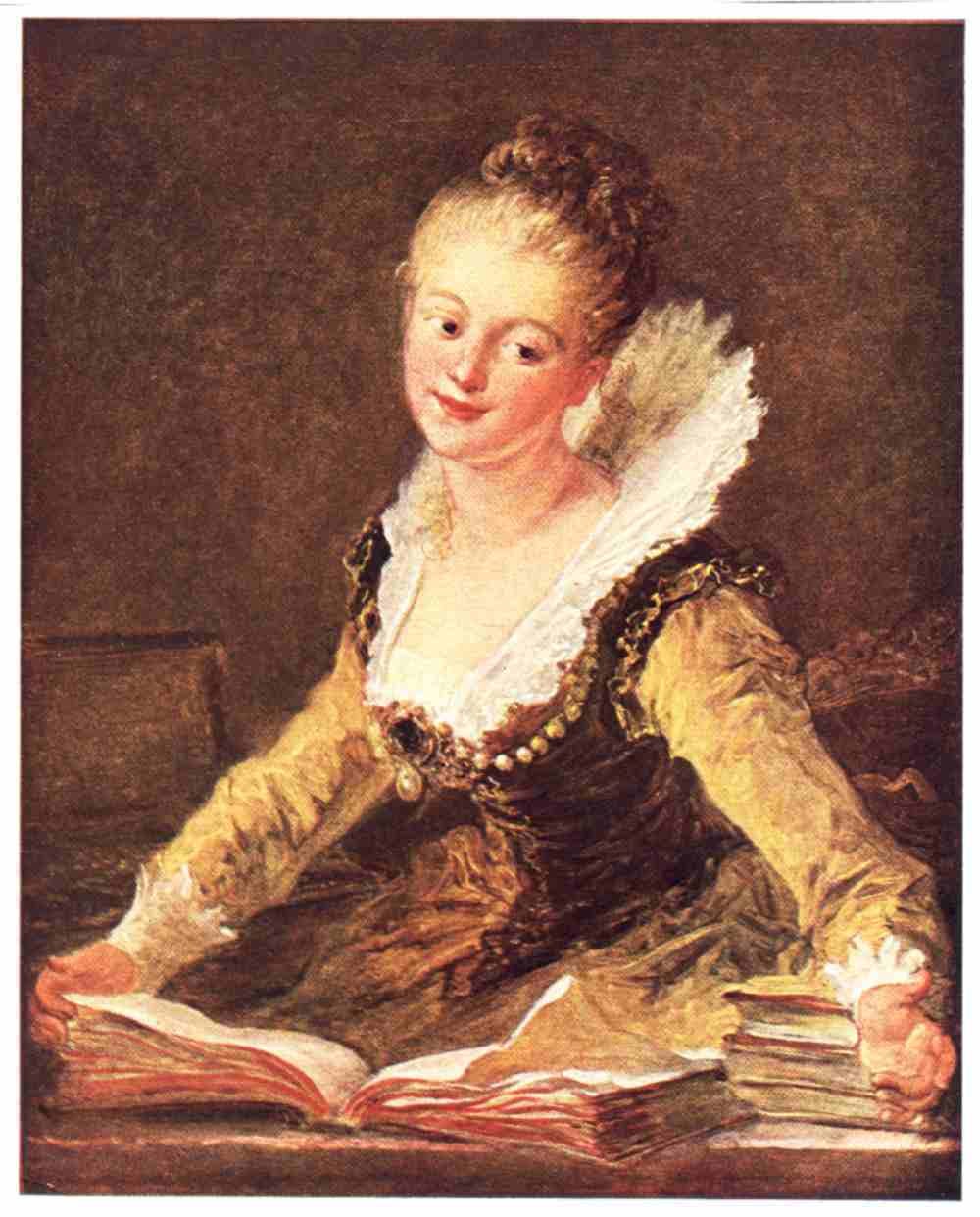
Nearby lived Jacques Brillon and his family, who frequently invited me to dine. I was particularly charmed by young Madame Brillon – she was 33 when we met -- who, among other accomplishments, wrote and played music beautifully. She even composed a piece in honor of America’s victory, the first thing of its kind, which she entitled, “The March of the Insurgents.” I confess to having fallen a little in love with “my Brilliant” as I sometimes called her, and spent a good deal of time in her company. I even thought to match her daughter Cunégonde with my grandson William Temple Franklin, Temple as he is usually called, who was my right hand in France. I think the young people were not averse to the match, but the lady’s family was firmly set against her marrying anyone not raised in the Roman church, and the scheme came to nothing. Madame Brillon and I corresponded after my return to America, and I was saddened to hear of the death of her husband in 1787, leaving her a widow at 43.
While we were neighbors we corresponded as well, the letters passing back and forth between our houses. In one of those letters, I told her a story of my childhood, and the lesson I had taken from it. I share that letter with you today, translated into English, which I did shortly after writing it, when I printed the story as one of my “bagatelles.” In that letter I write mysteriously of “the Apples of King John” in a paragraph omitted from the printed version. Madame Brillon knew what I meant, though, kind reader, you need not.
Nevertheless, I assure you that I remain, as ever,
you friend and humble servant,
B. Franklin
p.s. I attach a portrait of Madame Brillon.
______________________________
Passy – November 10, 1779.
Dear Madame,
I received my dear friend’s two letters, one for Wednesday and one for Saturday. This is again Wednesday. I do not deserve one for today, because I have not answered the former. But indolent as I am, and averse to writing, the fear of having no more of your pleasing epistles, if I do not contribute to the correspondence, obliges me to take up my pen. And as M. B. has kindly sent me word, that he sets out to-morrow to see you; instead of spending this Wednesday evening as I have long done its name-sakes, in your delightful company, I sit down to spend it in thinking of you, in writing to you, and in reading over and over again your letters.
I am charmed with your description of paradise, and with your plan of living there. And I approve much of your conclusion, that in the meantime we should draw all the good we can from this world. In my opinion we might all draw more good from it than we do, and suffer less evil, if we would but take care not to give too much for our whistles. For to me it seems that most of the unhappy people we meet with, are become so by neglect of that caution.
You ask what I mean? — You love stories, and will excuse my telling you one of myself.
When I was a child of seven years old, my friends, on a holiday, filled my pocket with coppers. I went directly to a shop where they sold toys for children; and being charmed with the sound of a whistle, that I met by the way in the hands of another boy, I voluntarily offered and gave all my money for one. I then came home, and went whistling all over the house, much pleased with my whistle, but disturbing all the family. My brothers, and sisters, and cousins, understanding the bargain I had made, told me I had given four times as much for it as it was worth; put me in mind what good things I might have bought with the rest of the money; and laughed at me so much for my folly, that I cried with vexation; and the reflection gave me more chagrin than the whistle gave me pleasure.
This, however, was afterwards of use to me, the impression continuing on my mind; so that often, when I was tempted to buy some unnecessary thing, I said to myself, don’t give too much for the whistle; and I saved my money.
As I grew up, came into the world, and observed the actions of men, I thought I met with many, very many, who gave too much for the whistle.
When I saw one too ambitious of court favor, sacrificing his time in attendance on levees, his repose, his liberty, his virtue, and perhaps his friends, to attain it, I have said to myself, This man gives too much for his whistle.
When I saw another fond of popularity, constantly employing himself in political bustles, neglecting his own affairs, and ruining them by that neglect, He pays, indeed, said I, too much for his whistle.
If I knew a miser, who gave up every kind of comfortable living, all the pleasure of doing good to others, all the esteem of his fellow-citizens, and the joys of benevolent friendship, for the sake of accumulating wealth, Poor man, said I, you pay too much for your whistle.
When I met with a man of pleasure, sacrificing every laudable improvement of the mind, or of his fortune, to mere corporeal sensations, and ruining his health in their pursuit, Mistaken man, said I, you are providing pain for yourself, instead of pleasure; you give too much for your whistle.
If I see one fond of appearance, or fine clothes, fine houses, fine furniture, fine equipages, all above his fortune, for which he contracts debts, and ends his career in a [debtors’] prison, Alas! say I, He has paid dear, very dear, for his whistle.
When I see a beautiful sweet-tempered girl married to an ill-natured brute of a husband, What a pity, say I, that she should pay so much for a whistle!
In short, I conceive that great part of the miseries of mankind are brought upon them by the false estimates they have made of the value of things, and by their giving too much for their whistles.
Yet I ought to have charity for these unhappy people, when I consider that with all this wisdom of which I am boasting, there are certain things in the world so tempting -- for example the Apples of King John, -- which happily are not to be bought, for if they were put to sale by auction, I might very easily be led to ruin myself in the purchase, and find that I had once more given too much for the whistle.
Adieu, my dearest friend, and believe me ever
yours very sincerely and with unalterable affection.
B. Franklin
A Passy, le 10 Novembre 1779.
Chère Madame Brillon,
J’ai reçu les deux Lettres de ma chere Amie, l’une pour Mercredi, l’autre pour le Sammedi. C’est aujourd’hui encore Mercredi. Je ne mérite pas d’en avoir encore, parce que je n’ai pas fait Réponse aux précédentes. Mais, tout indolent que je suis, & quelque Aversion que j’aie d’écrire, la Crainte de n’avoir plus de vos charmantes Epitres, si je ne contribue aussi ma part pour soutenir la Correspondance, me force de prendre la Plume. Et comme M. B. m’a mandé si obligeamment qu’il part demain matin pour vous voir, moi, au lieu de passer ce Mercredi au soir, comme je l’ai fait si long-temps de ses Prédécesseurs du même Nom, en votre douce Société, je me suis mis à mon Ecritoire, pour le passer à penser à vous, à vous écrire, & à lire & relire ce que vous m’avez si délicieusement écrit.
Je suis charmé de votre Description du Paradis, & de vos Plans pour y vivre. J’approuve aussi très-fortement la Conclusion que vous faites, qu’en attendant il faut tirer de ce bas monde tout le Bien qu’on en peut tirer. A mon Avis il est très-possible pour nous d’en tirer beaucoup plus de Bien, que nous n’en tirons, & d’en souffrir moins de mal, si nous voulions seulement prendre garde de ne donner pas trop pour nos Sifflets. Car il me semble que la plupart des Malheureux qu’on trouve dans le Monde, sont devenus tels par leur Négligence de cette Précaution.
Vous demandez ce que je veux dire? —Vous aimez les Histoires, & vous m’excuserez si je vous en donne qui regarde moi-même. Quand j’étois un Enfant de cinq ou six ans, mes Amis, un Jour de Fête, remplirent ma petite Poche de Sols. J’allai tout de suite à une Boutique où on vendoit des Babioles; mais étant charmé du Son d’un Sifflet, que je rencontrai en Chemin dans les mains d’un autre petit Garçon, je lui offris & donnai volontiers pour cela tout mon Argent. Revenu chez moi, sifflant par toute la Maison, fort content de mon Achat, mais fatiguant les Oreilles de toute la Famille, mes Freres, mes Soeurs, mes Cousines, entendant que j’avois tant donné pour ce mauvais Bruit, me dirent que c’étoit dix fois plus que la Valeur; alors ils me firent penser au Nombre de bonnes Choses, que je pouvois acheter avec le Reste de ma Monnoie, si j’avois été plus prudent; & ils me ridiculiserent tant de ma Follie, que je pleurois de cette Vexation; & la Réflexion me donnoit plus de Chagrin, que le Sifflet de Plaisir.
Cet Accident fut cependant dans la Suite, de quelque Utilité pour moi, l’Impression restant sur mon Ame; de sorte que, tant lorsque j’étois tenté d’acheter quelque chose qui ne m’étoit pas nécessaire, je disois en moi-même, Ne donnons pas trop pour le Sifflet: & j’épargnois mon Argent.
Devenant grand Garçon, entrant dans le Monde & observant les Actions des Hommes, je vis que je rencontrois Nombre de Gens qui donnoient trop pour le Sifflet.
Quand j’ai vu quelqu’un, qui, ambitieux de la Faveur de la Cour, consumoit son Temps en les Assiduités aux Levers; son Repos, sa Liberté, sa Vertu, & peut-être ses vrais Amis, pour obtenir quelque petite Distinction; j’ai dis en moi-même, Cet homme donne trop pour son Sifflet. —Quand j’en ai vu une autre, avide de se rendre populaire, & pour cela s’occupant toujours de Contestations publiques, négligeant ses Affaires particulieres, & les ruinant par cette Négligence; Il paye trop, ai-je dit, pour son Sifflet. —Si j’ai connu un Avare, qui renonçoit à toute Maniere de vivre commodement, à tout le Plaisir de faire le bien aux autres, à toute l’Estime de ses Compatriotes, & à tous les Charmes de l’Amitié, pour avoir un Morçeau de Métal jaune: Pauvre homme, disois-je; vous donnez trop pour votre Sifflet. —Quand j’ai rencontré un Homme de Plaisir, sacrifiant tout louable Perfectionnement de son Ame, & toute Amélioration de son Etat, aux Voluptés du Sens purement corporel, & détruisant sa Santé dans leur Poursuite, Homme trompé, ai-je dit, vous vous procurez des Peines au lieu des Plaisirs; vous payez trop pour votre Sifflet. —Si j’en ai vu un autre, entété de beaux Habillemens, belles Maisons, beaux Meubles, beaux Equipages, toutes au-dessus de sa Fortune, qu’il ne se procuroit qu’en faisant des Dettes, & en allant finir sa Carriere dans une Prison; Hélas! ai-je dit, il a payé trop pour son Sifflet. —Quand j’ai vu une très-belle Fille, d’un Naturel bon & doux, mariée à un Homme féroce & brutal, qui la maltraite continuellement, C’est grande Pitié, ai-je dit, qu’elle ait tant payé pour un Sifflet! —Enfin, j’ai conçu, que la plus grande Partie des Malheurs de l’Espece humaine viennent des Estimations fausses qu’on fait de la Valeur des choses, & de ce qu’on donne trop pour les Sifflets.
Néamoins je sens que je dois avoir de la Charité pour ces Gens malheureux, quand je considere qu’avec toute la Sagesse dont je me vante, il y a certaines Choses dans ce bas Monde si tentantes; par Exemple, les Pommes du Roi Jean, lesquelles heureusement ne sont pas à acheter; car si elles étoient mises à l’Enchere, je pourrois être très-facilement porté à me ruiner par leur Achat, & trouver que j’aurois encore une fois donné trop pour le Sifflet.
Adieu, ma très-chere Amie, croyez-moi toujours le vôtre, bien sincerement, & avec une Affection inaltérable.
B. Franklin
Very good advice to follow, indeed.
I may just be really thick-headed, but now I'm very, very curious about the Apples of King John..,.